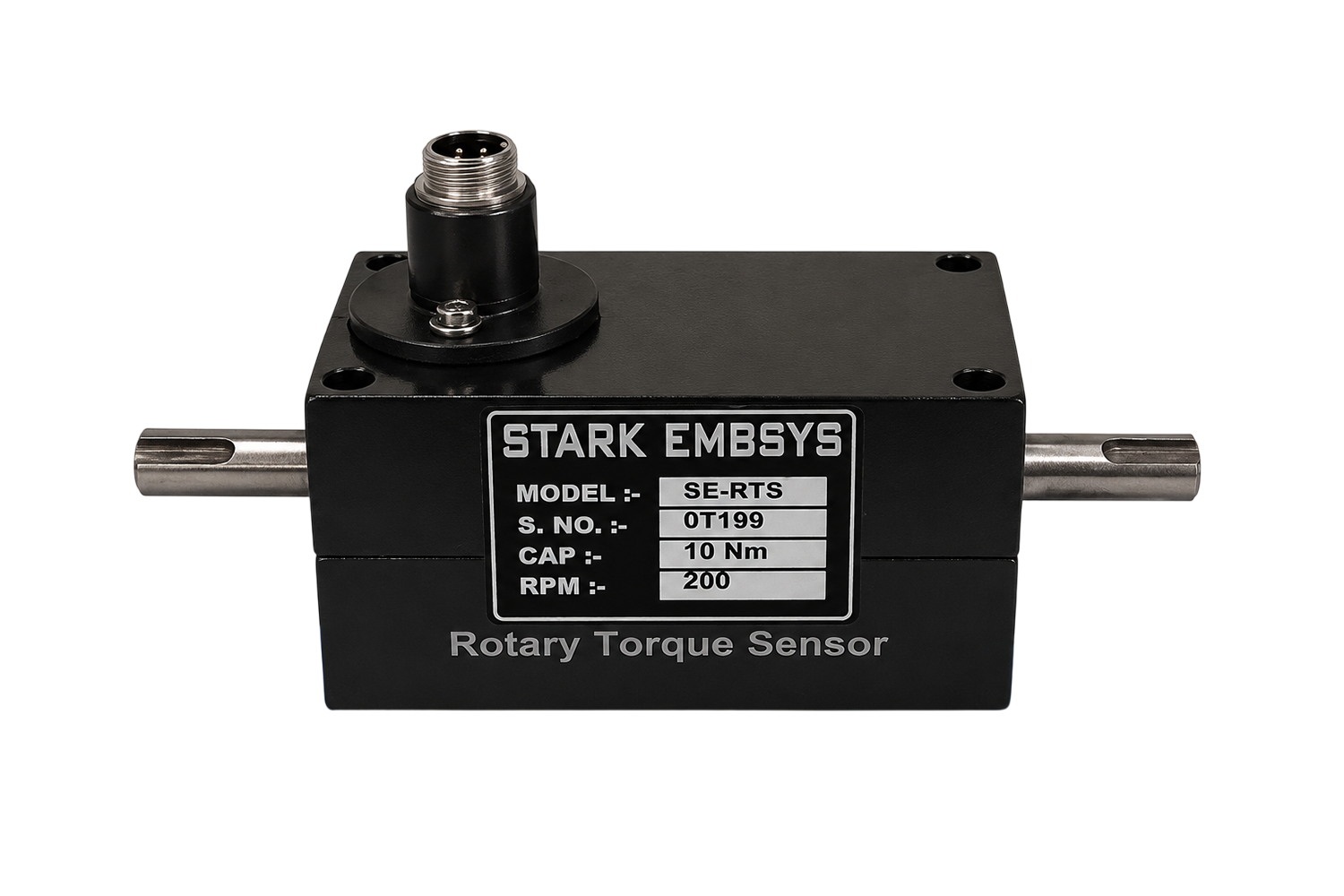
Rotary torque sensor

Rotary Torque Sensor

Rotary torque sensors measure torque by being coupled between an object and what it is imparting torque to. Inside the torque sensor, a shaft covered with strain gauges rotates. These strain gauges measure the torque transmitted through the shaft.

Reaction Torque sensors work by measuring the reaction force generated by an object that is creating torque. It measures this torque by being in line with an object generating or acted on by torque such as a motor and its static mounts. These types of torque sensors are not intended to rotate. They can under controlled circumstances be rotated over a small range or can be used with rotating shafts that pass through the middle of our through-hole reaction rotary torque sensor.

The word "rotary" throws some buyers off - it doesn't mean the sensor spins on its own, it means the sensor is designed to measure torque on a shaft that's already rotating, as opposed to a static setup where nothing moves. That distinction matters a lot when you're speccing equipment, because a static torque sensor bolted into a rotating shaft simply won't survive the application, and a rotary sensor used where it isn't needed adds unnecessary cost and complexity. We usually start every enquiry by asking whether the shaft in question actually rotates during the test, since that one answer decides half the specification.

What can you check through this machine?

The Computer controlled equipment is used to test tensile strength and elongation of a wide range of materials. The parameters that can be measured are Flexural, Compression, Bending, Shearing, Peeling, Tear & other tests are possible through special grips & fixtures.

Force Measurement

• Force is measured by Electronic Load Cells of high accuracy.

• Two Load-cells are used: One each for higher and lower strength material.

Elongation Measuring Device

• This is a Built-in Device

• Through the cross head movement by incremental encoder, elongation is measured

• For range & resolution, refer specification table

Batch Test Facility

In a batch test, statistical analysis report is generated for the minimum, maximum, mean and C.V % of the strength and elongation.

Cyclic Test Facility

This is used for rubber belting, where loading and unloading of specimen is automatic for a maximum of 999 cycles. With 5% tolerance, specimen can be stretched between the given load or elongation limit.

Slip Ring vs Telemetry - Getting the Signal Off a Spinning Shaft

This is the single biggest design decision in any rotary torque sensor, and it's worth understanding before you buy. Slip ring sensors use physical brushes riding on rotating contact rings to carry power in and signal out - proven technology, lower upfront cost, but the brushes are a wear item and eventually need replacing, especially in continuous high-speed duty. Telemetry-based sensors transmit power and signal wirelessly across a small air gap using rotary transformers or RF, which removes physical contact entirely and suits applications running for years without a service window - dynamometer test cells being the classic example. Neither is universally "better"; it comes down to your duty cycle and how much downtime you can tolerate for maintenance.

Strain Gauges and Why Bonding Quality Matters

Inside the shaft, strain gauges are bonded on in a precise bridge pattern that measures the tiny twist that occurs under torque load. The bonding process itself is where quality separates from cost-cutting - a poorly bonded gauge will creep or drift under sustained load, giving you readings that slowly wander even though the actual torque hasn't changed. Temperature compensation built into the bridge circuit also matters more than most buyers realise, since a shaft running in a hot engine bay behaves very differently from the same sensor tested at room temperature on a bench.

Typical Places We See These Installed

Engine and motor dynamometer test cells are the most common home for a rotary torque sensor, measuring torque and power output as the unit runs through its full speed range. Electric vehicle drivetrain testing has become a big driver of demand in the last few years, since motor efficiency mapping needs accurate torque data at every RPM point. Pump, compressor and gearbox manufacturers use them for acceptance testing before a unit ships to a customer. Most of these test rigs also pair the sensor with a torque sensor readout system or a load cell amplifier for signal conditioning, so the raw bridge output becomes a clean, readable number on the test bench display.

Keeping Accuracy Over the Sensor's Working Life

A rotary torque sensor is a precision instrument and it should be treated like one - avoid shock-loading it beyond rated capacity, and don't over-tighten the coupling adaptors beyond what's specified, since that alone can introduce a false zero offset. Annual NABL or NPL traceable calibration keeps the sensor's readings defensible in an audit, and we'd recommend checking it sooner if the sensor has been through an overload event or a hard knock during installation or transport. Facilities running a torque wrench calibration machine or a torque tester elsewhere in the plant often schedule all their torque instruments for calibration in the same visit, which keeps the paperwork simpler come audit time.

Frequently Asked Questions

Can a rotary sensor also be used in a static application? Technically yes for basic static torque, but you're paying for rotating-shaft capability you don't need - a simpler static or reaction sensor is usually the more economical choice for a non-rotating setup.

What speed range can these sensors handle? This depends heavily on the signal transmission method - slip ring types are generally rated lower than telemetry-based sensors, so tell us your maximum operating RPM and we'll match the right technology to it.

Do you supply the display and data logging along with the sensor? Yes, we provide matching digital readouts and software so the sensor isn't left as a standalone component without a way to actually view or record your torque data.

SPECIFICATIONS

Capacity
100,200,500Kgf
Load applying
Speed controlled Motorized operation
Calibration
NABL / NPL Calibrated (Optional)
Warranty
12 months from the date of installation
Type
Universal,Tension & Compression
Least Count
0.01mm (Deflection)
Measuring Units
N,KN,Kgf (Optional)
Accuracy
+ 1% of the reading